A real test of the idea
Not surveys and opinions but actual behaviour: did they sign up, did they come back, did they pay. Only that data shows what the idea is worth.


Startup website / MVP
You do not need years to perfect an idea. In 6–10 weeks we build a working MVP: real users sign up, use the product and give you the first numbers — both for the conversation with investors and for deciding whether to continue or pivot.
What is an MVP?
An MVP is the first working version of a product — enough to test the core hypothesis with real users, and built so it can grow from there.
In a startup, a website does two jobs. First, presentation: a page where investors, partners and early customers grasp your idea, with the problem and the solution stated clearly. Second, the product itself: a working version where users sign up, log in and get real value.
An MVP (Minimum Viable Product) is not a cheap half-finished thing. It is a version that is genuinely functional but limited to what is needed to test the core hypothesis. Extra features are stripped out and the main scenario is finished properly — because the market answers only one question: will people actually use this?
On startup projects Innosoft Systems focuses on two things: speed and room to grow. Speed, because every month of delay means competitors and budget. Growth, because if the MVP works you should not have to rewrite it from scratch — the architecture, database and API are designed with headroom from day one.
In short
Why experienced teams start with an MVP rather than a full product:
Why you need one
It is not a cost — it is the cheapest way to find out. Here is what it actually solves.
Not surveys and opinions but actual behaviour: did they sign up, did they come back, did they pay. Only that data shows what the idea is worth.
A pitch deck is a promise. A working product and first user metrics are evidence — and the conversation takes on an entirely different tone.
Up to 80% of a full product's features typically go unused. An MVP builds only the core scenario, so money does not go into unnecessary code.
Being on the market in 6–10 weeks teaches you more than a year of refinement. Every week of delay is a head start for a competitor.
An MVP is not throwaway code. The API, database and infrastructure are designed for growth, so success does not force a rewrite.
If you have no technical co-founder, we take that role for the duration of the project: architecture, estimation, technology choices and roadmap.
Who orders one
Teams with an idea who do not yet know the market's answer.
Subscription services: user accounts, plans, payments and product analytics.
Two-sided markets: sellers and buyers, listings, search, transactions and a commission model.
Payment flows, identity, security and reporting — designed around regulation.
A learning platform: lessons, tests, certificates, an instructor portal and payments.
Appointments, telemedicine, monitoring and a patient portal — built to privacy requirements.
A working prototype and presentation page for an IT Park, grant or accelerator application.
Examples
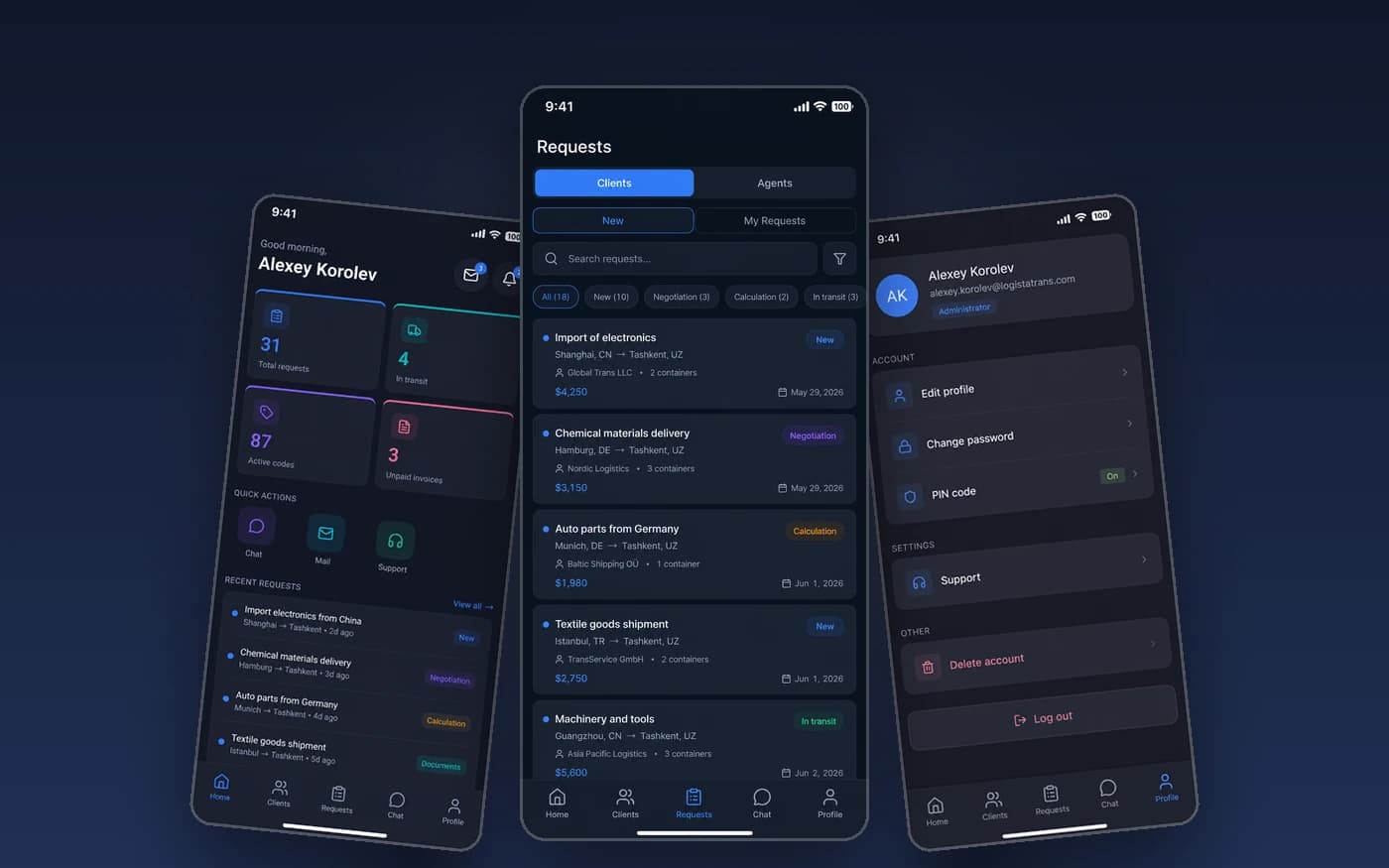
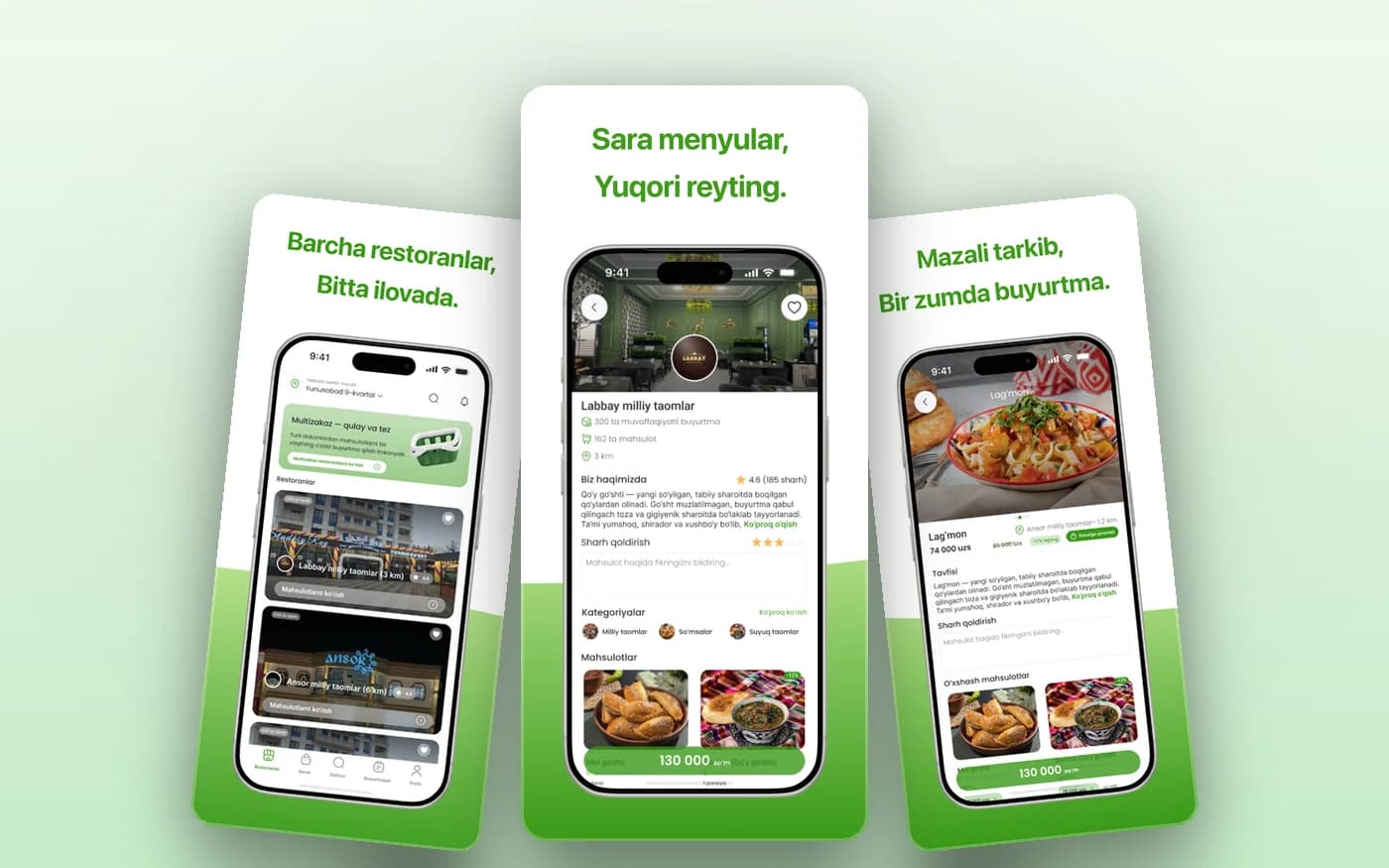
Every project from scratch: product logic, design and engineering are all ours.
Pricing
Pricing is transparent. Every plan includes technical consulting, architecture with headroom and support.
Launch
Presentation site + first feature
25,000,000UZS and up
4–6 weeks
Taking the idea to market, collecting a waitlist and starting investor conversations
Choose LaunchMVP
A fully working product
45,000,000UZS
8–12 weeks
Testing the hypothesis with real users and real payments
Choose MVPScale
Custom solution
On request
Project-dependent
Funded projects preparing for a mobile app and higher load
Request a quotePrices are for 2026; the final quote is confirmed after a free technical consultation and once the feature list is agreed. Payment is staged by sprint — which lowers the financial risk for a startup.
What's included
These are not paid add-ons — they are in the base plan too.
Process
We work in sprints — you see a working result every one to two weeks.
We analyse the idea, market, competitors and target user, and write down exactly which hypothesis we are testing.
Features are prioritised: only what is needed to test the hypothesis goes into the MVP. The rest moves to the roadmap.
An interactive prototype in Figma. We show it to real people and fix it before any code is written.
A working version every one to two weeks. You try it, give feedback, and the next sprint is planned around it.
Load, security and payment flows are tested. The product goes live and analytics are connected.
We analyse first-user metrics and decide together what to double down on and what to drop.
FAQ
Short answers to the questions we hear most about startup projects.
In a free technical consultation we assess the idea, define what belongs in the MVP and fix an exact price and timeline. No obligation.